Bengaluru Private Cars Top 25 Lakh Worsening Traffic In Outskirts Like Whitefield
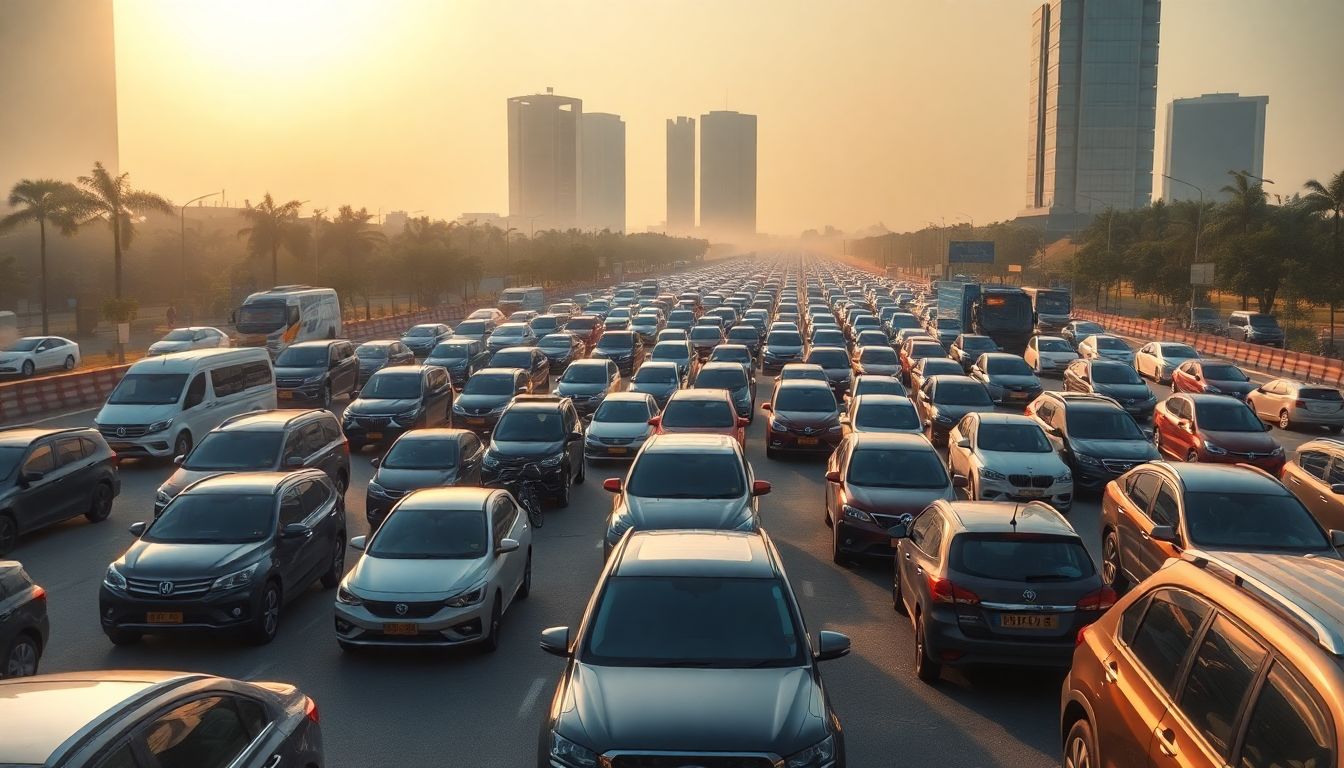
The number of registered private cars in Bengaluru has exceeded 25 lakh for the first time, intensifying traffic congestion in outer neighbourhoods such as Whitefield which have developed without adequate street grids. According to data from the transport department, the city reached 25.2 lakh private cars as of June 30, 2026, driven by a growing reliance on personal vehicles amid public transport delays.
During the month of June 2026 alone, the city added 13,519 new private cars. This surge contributed to a total of 78,084 new vehicle registrations in June, making it the third-highest registration month recently, trailing only October 2025 and January 2026. The total vehicle population in Bengaluru now stands at 1.28 crore, including 87 lakh two-wheelers and close to three lakh yellow-board taxis.
This rapid rise in personal vehicles has cemented Bengaluru’s reputation as the second-most congested city in the world, according to the TomTom Traffic Index, placing it just behind Mexico City. The index revealed that drivers in Bengaluru spend an average of 36 minutes and 9 seconds to travel just 10 kilometres, losing approximately 168 hours annually in peak-hour traffic.
Urban planning and mobility experts point to systemic failures in public infrastructure as the primary driver of this trend. Metro expansion projects have repeatedly missed deadlines due to alignment changes, such as the introduction of double-decker and tunnel corridors on Phase 3 and Phase 3A. No new metro construction has commenced in the city in the last four and a half years.
V Ravichandar, a member of the government-constituted Brand Bengaluru committee, highlighted that outlying areas like Whitefield and Sarjapur are particularly vulnerable. These neighbourhoods grew rapidly without a proper street network, leaving commuters heavily dependent on a limited number of trunk roads. Ravichandar noted that proposed tunnel and elevated road projects fail to resolve the gridlock in these specific zones.
Furthermore, the Bangalore Metropolitan Transport Corporation (BMTC) bus fleet has shrunk over the past four years. Urban mobility expert Satya Arikutharam warned that the lack of public transport options is forcing residents to buy cars and two-wheelers, which will expand peak congestion from 10 major locations to 20 or more. Arikutharam criticized the state's proposed Rs 1.5 lakh-crore investment in tunnels and elevated roads, arguing that only expanded public transport and walkable footpaths can address the crisis.
To combat the growing gridlock, Chief Minister DK Shivakumar previously announced Rs 1.5 lakh crore worth of infrastructure works, including tunnel roads, though experts remain skeptical of their effectiveness in solving the city's long-term transport challenges.