First Gaganyaan uncrewed flight may be delayed to late 2027 says ISRO chief
On Saturday, Indian Space Research Organisation (ISRO) Chairman V Narayanan indicated that the first uncrewed test flight for India's Gaganyaan human spaceflight mission could be delayed to the third quarter of 2027. Speaking at the Air Marshal L M Katre memorial lecture organised by the Air Force Association in Bengaluru, Narayanan noted that while efforts continue to target a launch by the end of 2026, the timeline is undergoing constant review to ensure human safety.
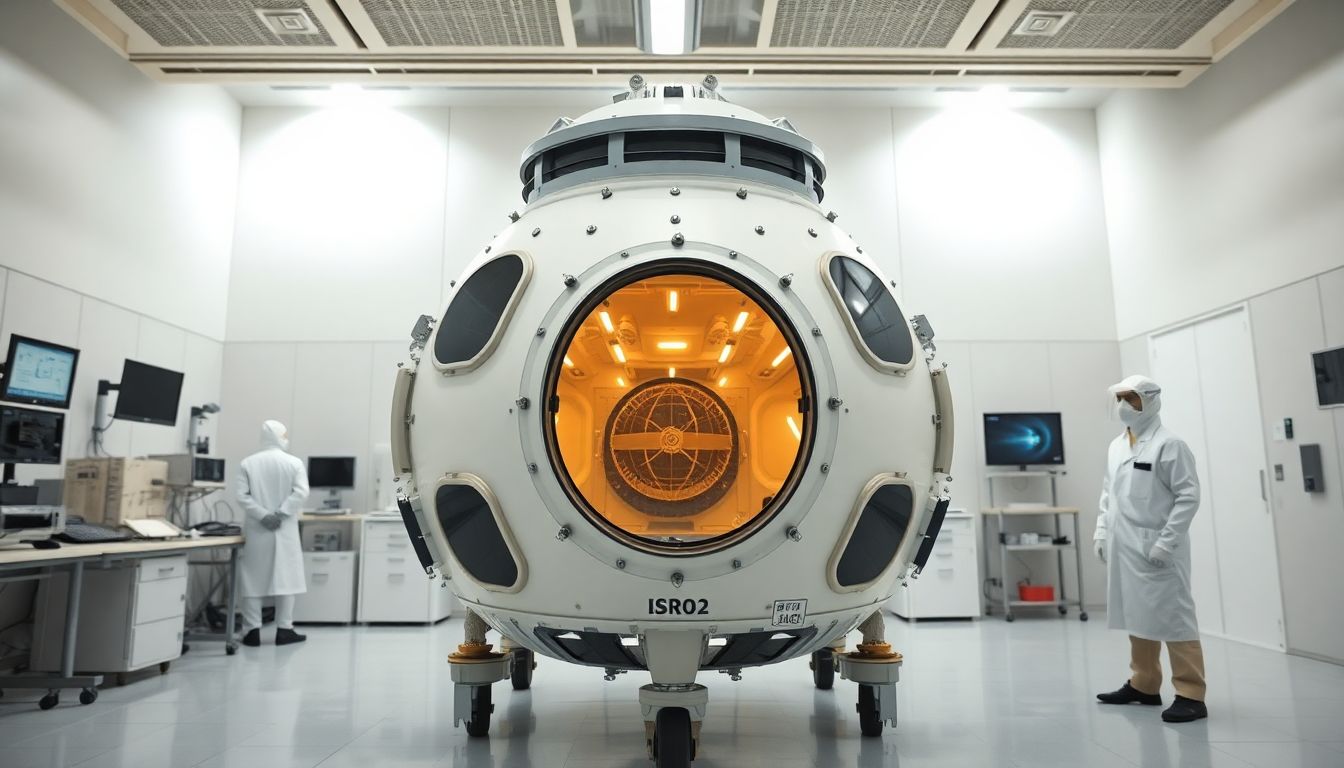
The Gaganyaan program is India's first human spaceflight initiative, requiring rigorous testing of the crew escape system and other human-centric products before astronauts can be launched into space. The Indian government has approved a continuation program that includes three uncrewed missions before the final crewed flight is attempted.
Narayanan explained that ISRO is currently working toward launching the first of these three uncrewed missions this year. Once the agency obtains and analyzes the results of this initial test, it will progress toward the crewed mission. He emphasized that because Gaganyaan is a highly technology-intensive national project, ensuring the safety of the crew in the event of any rocket malfunction is the absolute priority.
The Gaganyaan mission was originally scheduled for a 2022 launch, a target set by Prime Minister Narendra Modi to mark 75 years of Indian Independence. However, the schedule has faced multiple delays, including disruptions caused by the COVID-19 pandemic. Pushing the first uncrewed flight test to the third quarter of 2027 could subsequently delay the actual manned spaceflight to 2028.
During his lecture, Narayanan also discussed other recent space developments, including the Axiom-4 mission launched in June 2025. He shared that Indian scientists, including himself and Human Space Flight Centre Director D K Singh, successfully intervened to halt the launch of a SpaceX rocket at the Kennedy Space Centre after detecting a leakage problem. Subsequent inspection revealed a crack in a main line, which was corrected before the successful launch on June 25, 2025, carrying Indian astronaut Shubhanshu Shukla.
Addressing recent setbacks, the ISRO chairman acknowledged two successive failures of the workhorse PSLV rockets in 2025 and 2026. He stated that the agency now fully understands the issues and is in the process of rectifying them, emphasizing that space missions require absolute perfection.
Additionally, Narayanan mentioned that efforts are underway to restore the Navigation with Indian Constellation (NavIC) program to its optimum level of seven satellites, as it is currently operating with only three.