IISc Study Warns Double Decker Metro Corridors Will Reduce Bengaluru Transit Ridership
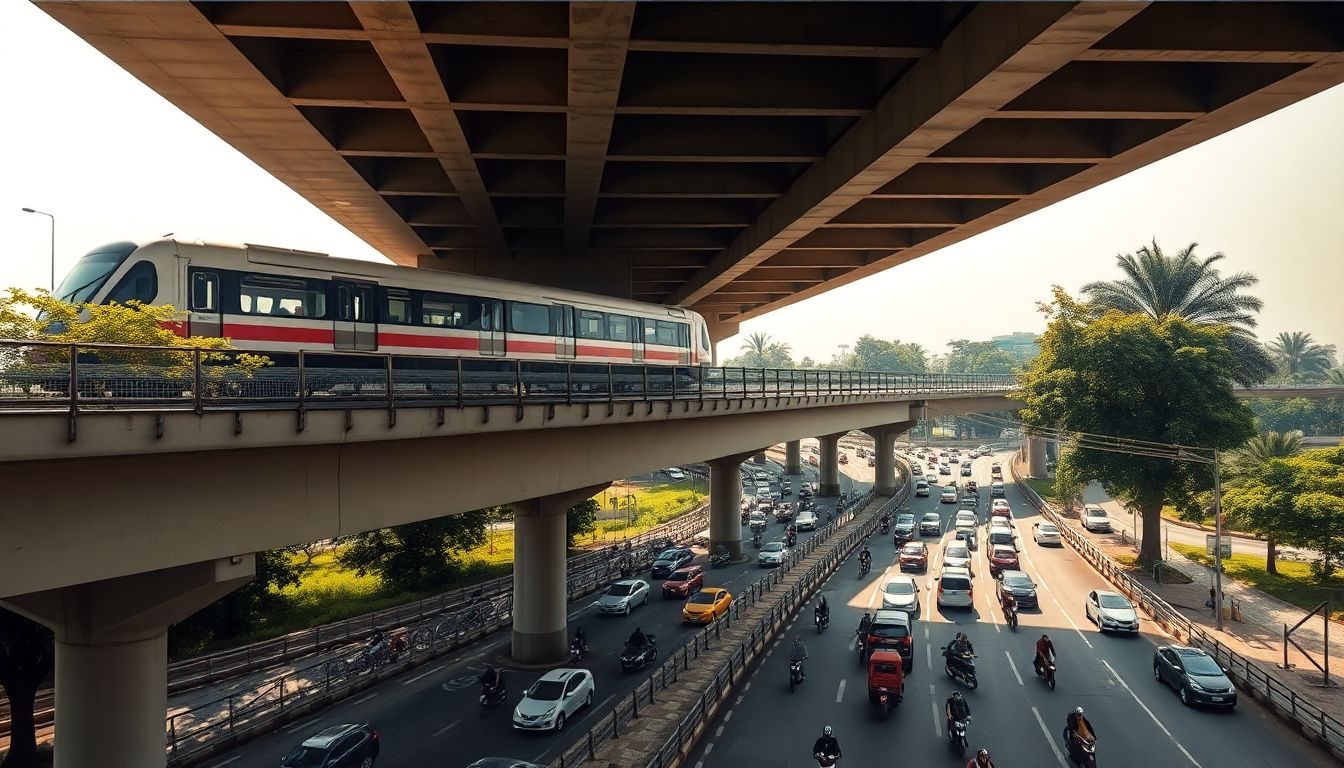
A new study by the IISc Sustainable Transportation Lab (IST Lab) has revealed that introducing double-decker road infrastructure along Bengaluru's Namma Metro Phase-3 corridors will decrease public transit ridership by encouraging commuters to shift to private vehicles. Led by Professor Ashish Verma, the technical report warned that the proposed road additions would run contrary to the objectives of mass rapid transit systems in the city.
The study, which has been submitted to the Ministry of Housing and Urban Affairs (MoHUA), projects a significant shift in travel behaviour across Bengaluru by the year 2041. According to the researchers, daily ridership on the Phase-3 corridors is expected to decline from 8.09 lakh passengers under a metro-only scenario to 7.98 lakh passengers if the double-decker road infrastructure is built.
By 2041, the city's bus mode share is estimated to fall by 6.4%, while the metro mode share would decline by 1.4%. Conversely, car usage is projected to increase by 3.8%, two-wheeler trips by 1.28%, and auto and taxi trips by 2.8%. The researchers noted that while double-decker corridors may initially appear to ease traffic, they ultimately encourage private vehicle use, leading to greater congestion.
The environmental impact of this shift is projected to be substantial. The report estimates that the double-decker corridors would generate an additional 17,012 kg of carbon dioxide (CO₂) daily. It would also lead to an extra 85.9 kg of carbon monoxide (CO), 12.6 kg of nitrogen oxides (NOx), 19.5 kg of hydrocarbons (HC), and 1.1 kg of PM2.5 emissions every day. Fuel consumption is projected to rise by more than 7,000 litres per day, costing commuters over ₹6.45 lakh daily.
Financially, the incorporation of double-decker road infrastructure is estimated to increase the Bangalore Metro Rail Corporation Limited’s (BMRCL) capital expenditure by ₹2,863.53 crore due to larger structural components, deeper foundations, and elevated stations.
The technical assessment recalculated the Economic Internal Rate of Return (EIRR) for the BMRCL’s investment in the double-decker component at 9.07%, while the EIRR for the overall double-decker project falls to 5.43% due to increased capital costs and pollution.
Furthermore, the study highlighted that the proposed infrastructure is not part of Bengaluru’s approved Comprehensive Mobility Plan, warning that proceeding without fresh approvals could expose the project to legal challenges. Prof. Verma stated that the project fundamentally undermines metro expansion objectives and is "fundamentally incompatible with metro rail objectives and, at large, with sustainable mobility and livability goals of Bengaluru."