
Karnataka Legislature Convenes Three-Day Session on Kasturirangan Ghats Report
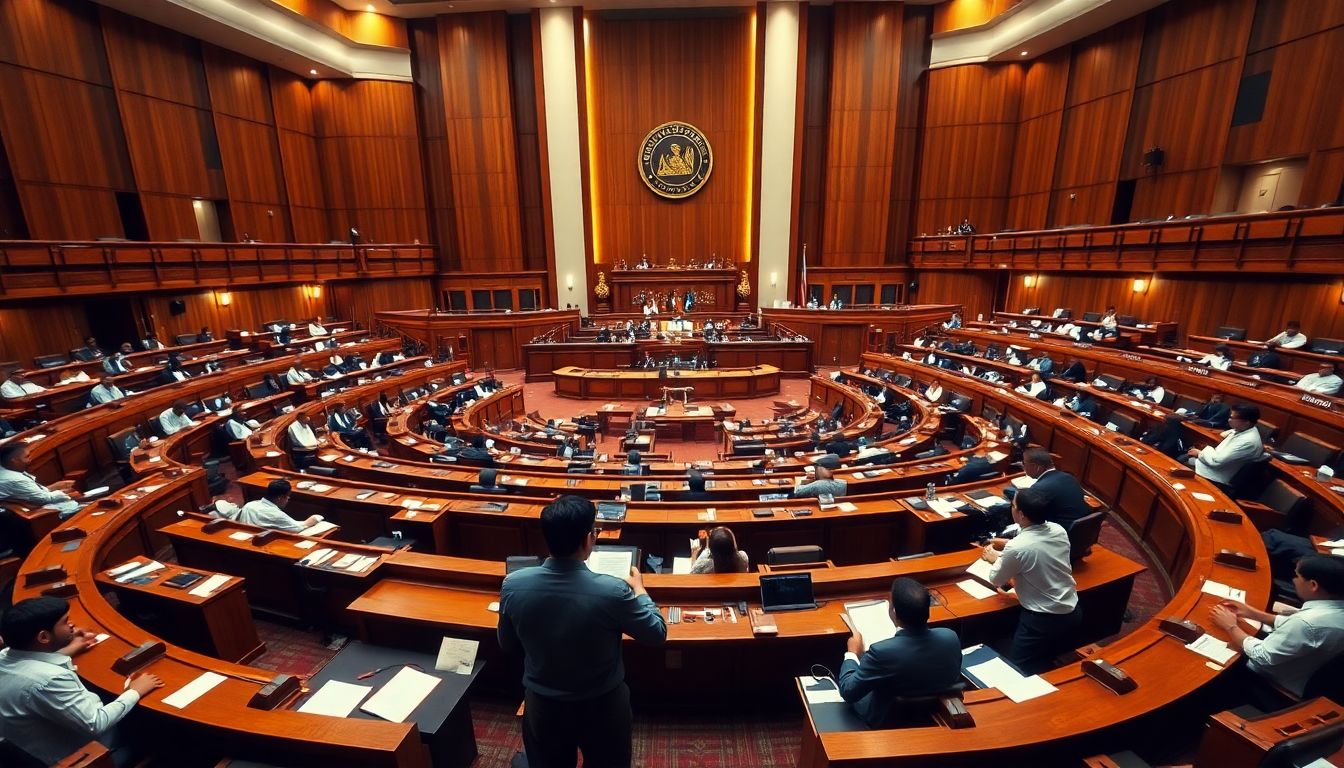
The Karnataka State Government has convened a three-day special legislature session starting Monday to debate the contentious proposal to notify parts of the Western Ghats as an Ecologically Sensitive Area. The discussions follow the Central Government's seventh draft notification issued about a month and a half ago, which proposes classifying 56,825.7 sq km across the Western Ghats as ecologically sensitive, including 20,668 sq km across 1,449 villages in 33 taluks of 10 Karnataka districts.
Chief Minister D K Shivakumar stated that an appropriate resolution would be adopted during the special session to protect farmers' interests. Shivakumar noted that after travelling through Udupi, Shivamogga, Chikkamagaluru, and Sakleshpur, he found residents deeply concerned about the report prepared by a committee headed by scientist K Kasturirangan. Karnataka previously rejected the recommendations but must formally submit its response to the Centre by September 27.
The draft notification restricts mining, quarrying, sand extraction from rivers, and other activities deemed environmentally hazardous. Local residents and farmers in districts including Kodagu, Hassan, Chikkamagaluru, and Uttara Kannada expressed concerns that the rules would impede agriculture, housing, roads, and drinking water pipelines. They noted existing difficulties in securing approvals near tiger reserves, wildlife sanctuaries, and deemed forests for routine activities like laying roads or felling trees.
Land rights remain a central point of debate, with thousands awaiting titles under the Forest Rights Act and land regularisation schemes. In Shivamogga, families displaced by the Sharavathi project remain without rehabilitation after 64 years. In Uttara Kannada, only 1,582 families have received land titles out of more than 85,000 applications filed under the Forest Rights Act. Residents have also raised issues regarding pending applications under Forms 50, 53, 57, and 94-C.
Minister for Rural Development and Panchayat Raj Eshwar Khandre said the Sanjay Kumar Committee failed to visit affected villages or consult locals. Khandre pointed out that nearly 16,000 sq km of the proposed 20,668 sq km in the state is already protected as reserves, sanctuaries, or forests. He urged the government to carry out a ground survey, protect residents' rights, halt large encroachments, and issue a special relief package.
Environmental groups counter that stronger safeguards are necessary to curb deforestation and prevent natural disasters such as floods and landslides. Activists pointed out that the Western Ghats act as a primary water source for Karnataka's rivers, with ecological disruption directly affecting state water security, while maintaining that the report does not seek the eviction of traditional dwellers.